Legacy Leaving — No Money or Financial Assets Required
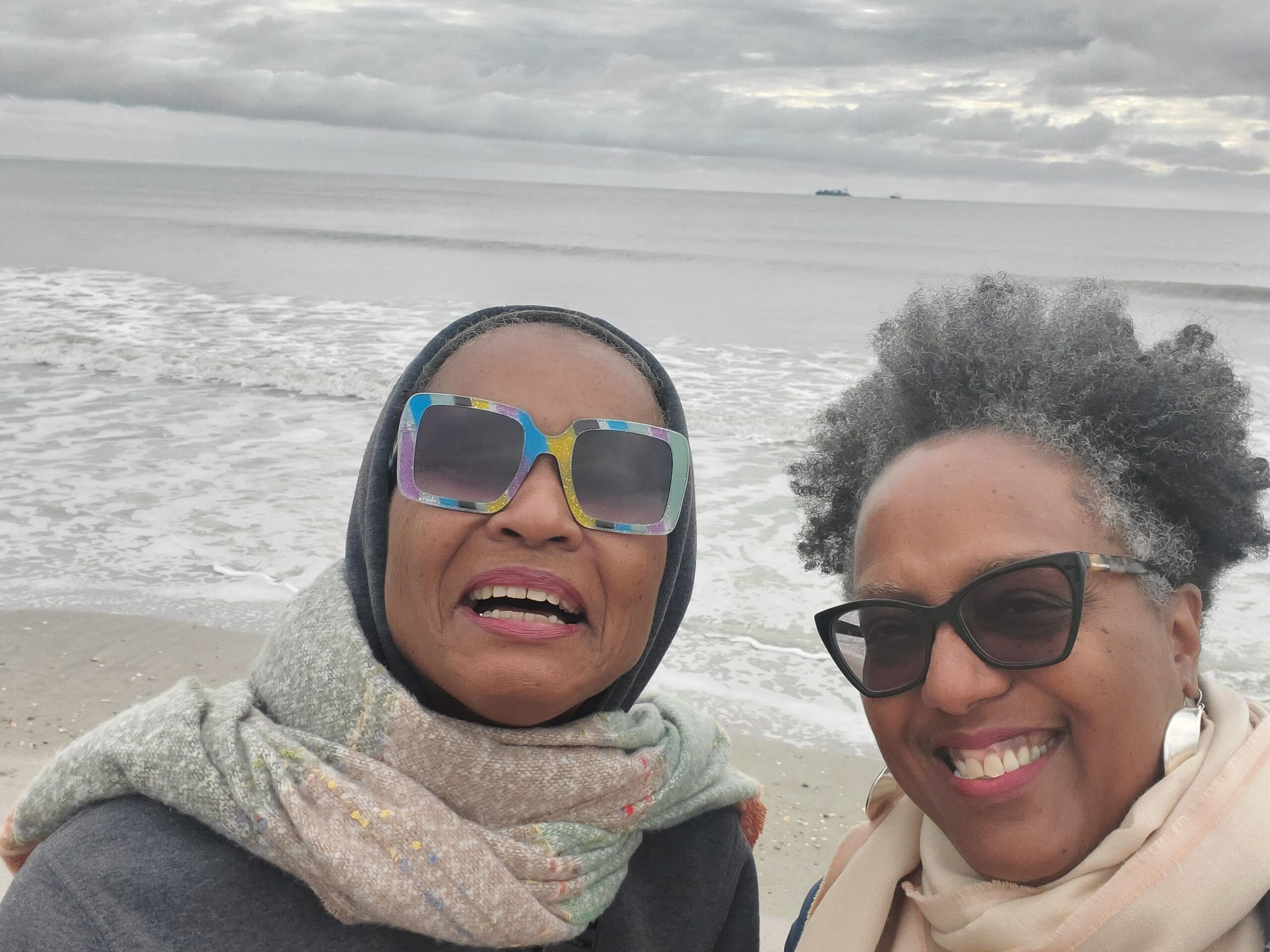
At 70, all I have to leave my son and granddaughter is my sometimes annoying habit of never giving up and a snazzy sun glasses collection, and that’s ok. Finally.
Lately I’ve seen quite a few articles and mentions of leaving legacies. Mostly on the AARP’s Facebook page and Flipboard. When I get to the part that talks about how to divvy up your 401K and other investments I keep swiping — they’re definitely not talking to me. Alas, my financial life was never on pace with my needs, let alone my desires; somehow, things did not quite work out on that level — despite my two and a half degrees (more on that later).
Throughout the years, my grandmother’s admonishment, “You gone be thankful for this ‘poe raising’ one day, chile” lived in my psyche. I am indeed, quite resourceful and have lived fairly well on very little most of my adult life; at 70, all I have to leave my son Jud and five-year old granddaughter, LisaBrooke, is a snazzy sun glasses collection (mostly from the $1.25 store and 5Below), camping gear, a Cannondale CAAD 9 bike and a bit of really cool costume jewelry (which she loves, by the way!)
My loving, kind and precocious granddaughter is the only child of extremely (extremely) overly indulgent millennials; that she does not understand her ‘child’s place’ is a sizeable understatement.
Bridging The Divide
We live about 600 miles apart, I see them three times a year at most. I am her only connection to my son’s family — both my side and his deceased father’s. The emotions of leaving her unconnected to her roots are tremendous.
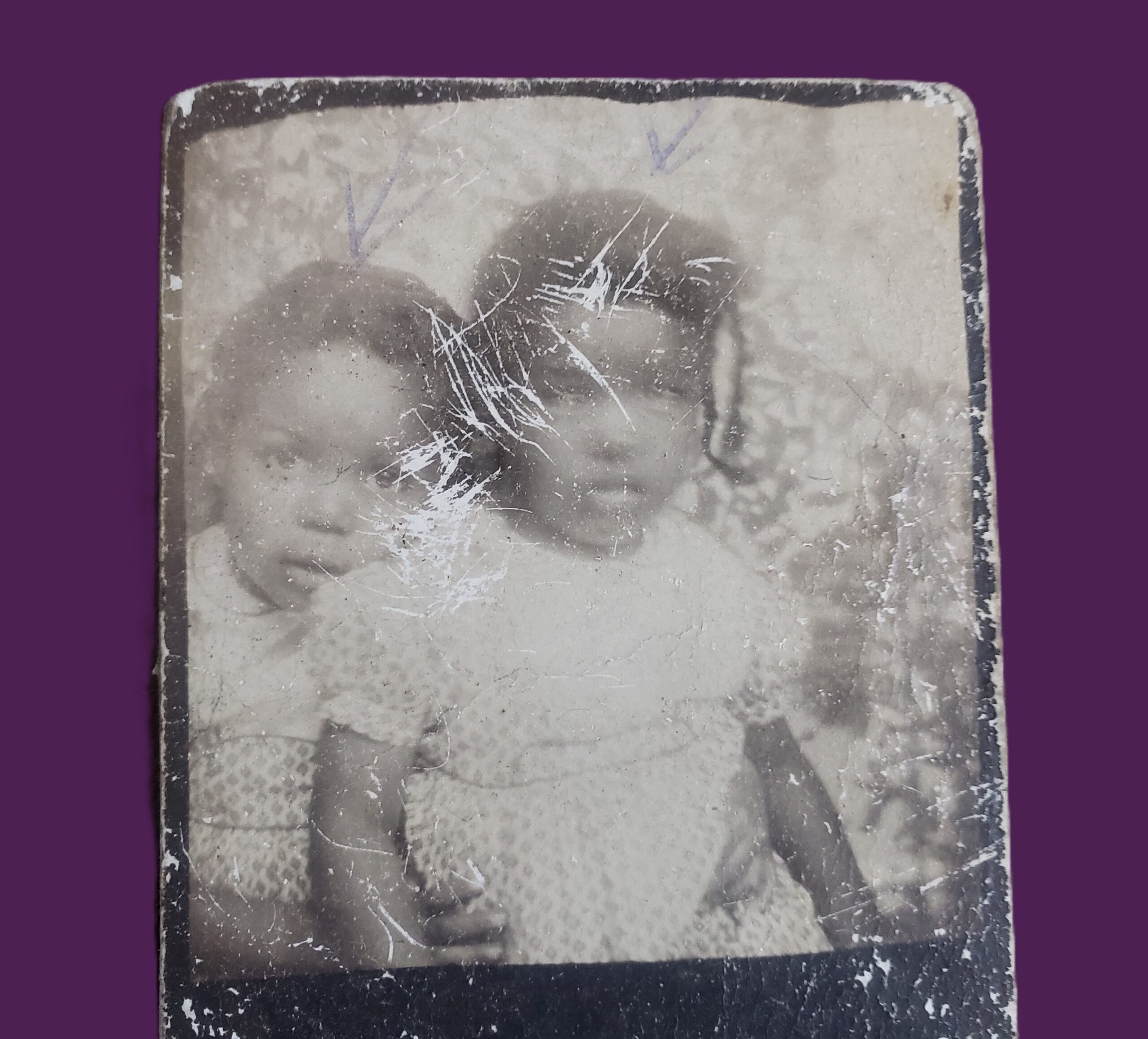
On each visit, I try to make as many memories as I can and hope that she will remember; I certainly remember nothing of being five. I grieve anew when I think of the fleeting and fickle nature of memories. We take lots of pictures, at least she will have images.
But what of the lessons and learning that she is too young to grasp, the nuances of our rich culture, especially language? Precious little of it is still intact. On a regular basis it is depleted and appropriated in ways that nauseate me. The other day ‘I’m Bad’ came on the radio. When Michael said, “…then whontchu slap my face” I smiled and heaved a big sigh. In those five words was a mix of creativity and lyricism that embodies the poetry and rhythm that marks our daily lives and is one of the hallmarks of our culture.
Traditions & Other Notions
As a Baby Boomer, I belong to the tail end of the ‘press and curl’ era. My older sisters wore those famous Red Fox panty hose; the seams might have been removed by them, though just barely. I both loved and dreaded seeing a clump of Queen Bergamot hair grease on the back of my moma’s left hand. I held my breathe as the straightening comb made a sizzle melting the grease on my hair.

The night before a holiday, we tore strips from brown paper grocery bags then twisted them from end to end — there were no plastic bags then. Pressed hair was wound around the strips with a simulated knot tied with the ends. A snug nylon stocking kept our hair rollers in place as we slept.
Around 13 or so, I came to know ‘perms’ thanks to my Uncle Paul’s girlfriend (Scott). She was a nurse who fixed hair in the evenings and on weekends. Her shop was in the basement of one of those huge Ft. Wayne (Indiana) houses on Lewis Street. (The perm was short-lived; I sported my Angela Davis inspired afro by summer’s end.)
My mother was the second oldest of 11 children, several of her seven brothers and one sister migrated to Ft. Wayne, welcomed by Great Uncle Paul; I hear he got there because that’s where he was when the work ran out. My guess is that he worked on the railroad, that would explain the denim overalls and matching cap he lived in. I spent many summers with one of three or four uncles or auntees there until my sophomore college year. There lots of little cousins; I babysat all of them.
I have no extended family or neighbors for my granddaughter, no one with whom to make memories.
Use your Words
I Google a bit more and come across a document by Dot Landis. According to her, there’s something called a life legacy; it’s built with words, ideas and memories — no money or financial assets required:
Legacy work is different from autobiography, memoir, life review, and genealogy not so much in what is written, but in our intent. We write to preserve our personal, familial, and communal histories. We write to express who we are and what we value, to mark our place in the world, to be witnessed by others, to build community, to be remembered. We write to bless those who come after us with our love and wisdom.
I feel a little better now. Words are a strong part of my inheritance, vividly displayed in my granddaughter.
I try to teach her things on my visits. There is so much, I try not to overload her. At 70 there is a resounding urgency: time is definitely running out.
I visited them for about a week during the summer. On one of our days, we danced. I ask her to tell the Google app to play ‘Popcorn.’ I want to make time to tell her the place that James Brown holds in my live, how he used to come to my hometown to visit Ms. Sally. She ran the Cafe’ across the street from my grandparents house.
When our beloved Regional Colored School closed in 1966, Ms. Sally kept our basketball trophy case on the counter.’ We were all devastated when desegregation came; I was a 6th grader, my learning and receptiveness were severely stymied; I’ve never fully recovered.
Movement and Meaning
For now I settle for dancing.
I watch her five year old body jump and spin, arms flailing about joyfully. I realize there will not be enough time for us to dance, for me to demonstrate rhythmic movement for her the way that it was taught to me. I grew up with teenaged uncles and aunties who danced constantly. Seemed like there was a party every saturday night at the house in the summer time; my mother could sit ’em all down.
Thanks to DJ Randie (“outta Nashville, TN”) and constantly spinning 45s, music and dancing was always present, except on Sunday, then it was Mahalia Jackson all day, no rock n roll was allowed and there was certainly no ironing.
A few feet away from her, I start to pop my fingers, looking at her — big smile beaming on both our faces — I ask, “You still remember how to do it?! Two fingers together and push!” I started teaching her how to pop them when she was about two. Her middle finger lands softly on the flesh just below her thumb and makes a quiet thud. We smile bigger now.
The Coffee Gene
At our McDonald’s outing after the park one day, my son sips approvingly on a whipped cream caffeinated something — coffee lover that he is. The child of a particularly discerning, cool New York Jew and a Georgia, country girl — both coffee snobs, he had no choice. Coffee drinking as a sensual experience had its beginning when I watched my moma drink it. I loved how she blow ripples across the caramel liquid through perfectly poised lips set just above the rim of the cup, saucer below it.
When I finally I learned to make it the way she liked it, I was thrilled. My son — Judson — (named after my father, Claude Judson, who was juniored to his father, my son only has the middle name) quickly says — in my granddaughter’s direction — “You can’t have any cause it has coffee in it.”
I wait a few quiet seconds, remembering the coffee smell mixed in with voices of visiting auntees and uncles coming from the kitchen on those glorious early summer mornings. Before long I say, “One sip is not gonna hurt her.” He says nothing, seemingly, I have been ignored. Then leaning the over-sized cup towards her, “Since Emmie says it wont hurt you, so.” She makes a little slurp followed by a big smile.
I finish my French fries; LisaBrooke is still working on her chicken nuggets, French fries and ranch dressing; it’s her favorite meal. In the week that I am there, she does not eat a single fresh vegetable, I can’t remember a frozen or canned one either. I have been a vegetarian for the majority of my years, vegan the last 20 or so. My son literally cut his teeth on raw carrots. He was never a picky eater; there was little that he wouldn’t try. Girls are decidedly different in many ways I have learned.
My heart breaks at the amount of processed foods they live on. In the freezer I see ‘farm fed’ or some such on a package of some kind of meat, “well then” I say as I close the door.
Traditions?
Mornings are our special time.
She knocks softly on my bedroom door, without waiting for me to say come in, there she is, a few stuffies en tow. She smiles, I scoot over and lift the covers as she runs over and climbs in bed with me. Running is her favorite French fries, chicken nuggets and ranch.
Eyeing me wipe sweat from under my sunglasses one hot day, she says, “I have to blow my nose too” or something close. “Oh no,” I tell her as I straighten it out to show her. ”This is a fancy ‘lady’ handkerchief, we only wipe sweat with this one. I have one for you though, soon as we get home!”
I tell her the story of how my grandmother gave me my first handkerchief when I was about 18; there has not been a summer without one since. As soon as we get home, I rush to find the one that I brought her. It’s blue and pink flowers on a dingy white background — clean and neatly folded. I wish I’d thought to bleach it; she doesn’t notice. Instead, she grabs it by a corner and starts to dance and wiggle around, flicking it as she goes. Before too long, she names it her magic hanky and dabs it randomly on her face.
Listening, Learning and Leaving
Now its another day. On our way to the park, we pass a house that she knows “There’s Aaron,” she says. Her dad has started ‘making nice’ (as his paternal grandmother Evie would say) with a few of the neighbors, I am happy — he needs more friends, a community for my granddaughter. Aaron looks up, shoulder-length blondish hair frames his slender face — reminiscent of my high school hippie buddies — already I like him.
As we near his house he walks out, hand extended, “I’m Maggie, Judson’s mom” I say, reaching out to meet his. He is working on his nice pepper garden and shares that he’s unloaded several of his hot ones on my son.
“Do you like them?” he asks me.
“I don’t!” My granddaughter comes back before I can shush her. He responds with nice words and a smile. I thank him, we exchange ‘nice to meet yous’ as LisaBrooke and I keep walking.
“LisaBrooke, he’s a grownup, so you must call him Mr. Aaron.” We talk regularly about how she is not allowed to participate in conversations when grown folks are talking, but this time I don’t mention.
Back home from the park, my granddaughter sits on the floor and removes her shoes, I stand at the door and do the same. Without looking at my son in the kitchen, she say, “Hey Dad, we saw Mr. Aaron.”